
The Short Answer
Your garage door is almost certainly the weakest point in your home's exterior wall, and the fix is a mix of inspection, reinforcement, and a few cheap parts swapped out before the first big wind event of the season. If wind gets behind an unbraced garage door, it can buckle the panels, pop the door off its tracks, or in worse cases blow the whole door into your garage, which pressurizes the structure and can damage the roof. Now, going into late fall and winter, with the heavy rain and occasional coastal storms this part of Virginia sees, is the right time to check this before it becomes an emergency call at 9 p.m. during a nor'easter.
Why the Garage Door Takes the Hit First
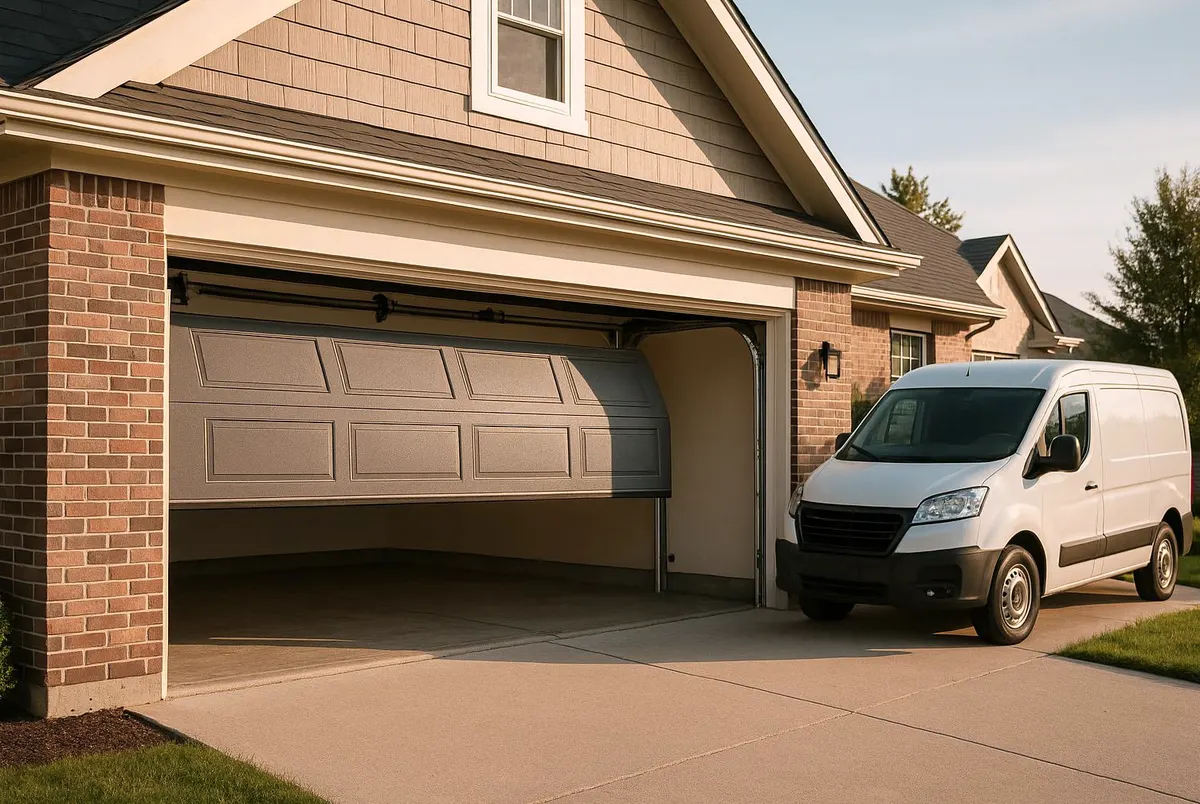
Every other exterior wall in your home is a continuous, braced surface: studs, sheathing, siding, all fastened together as one unit. A garage door is different. It's a large moving panel made of thin steel or aluminum sections, held in a track, and resisted mainly by rollers, hinges, and the strength of the track itself. There's no continuous structural wall behind it the way there is everywhere else on the house.
When wind hits the front of a house, pressure builds on that wall. A braced wall shrugs it off. A garage door, especially an older one without reinforcement, can flex, pull its rollers out of the track, or have hardware fail at the hinges. Once a garage door fails, wind pressure inside the garage pushes up against the roof structure from underneath, which is a common way roofs get damaged in bad storms. This is true everywhere, but it matters more here because the mix of older and newer housing stock in this area means a lot of garages still have original builder-grade doors and hardware that were never upgraded for wind resistance.
What This Season's Weather Actually Does to a Garage Door
Fairfax Station winters bring icy conditions, heavy rain, and the occasional coastal storm system with sustained high wind. Each of these stresses the door differently:
- Heavy rain and wind gusts push and pull against the door surface, testing every hinge, roller, and track bracket at once.
- Ice can freeze a door to the bottom seal or weather strip, so when the opener tries to lift it, it strains the opener motor, the springs, or the cables all at once.
- Rapid temperature swings cause metal tracks and hardware to contract and expand, which loosens bolts and brackets over a season faster than people expect.
- Coastal storm remnants that reach inland Virginia can carry sustained wind loads that an unreinforced door simply isn't built to handle.
A Real Pre-Storm Checklist
Inspect the Track and Rollers
Open and close the door manually (disconnect the opener first) and watch the rollers travel through the track. They should move smoothly without grinding, skipping, or wobbling side to side. Loose track brackets are a common failure point in wind events, so check that every bracket bolt is tight against the wall framing, not just snug.
Check the Hinges and Panel Connections
Wind stress concentrates at the hinges between panels. Look for hinges that are bent, cracked, or have elongated bolt holes, which is a sign metal fatigue is setting in. On older steel doors especially, this is where panels start to separate under pressure.
Test the Weatherstripping and Bottom Seal
A cracked or flattened bottom seal doesn't just let in cold air and water, it also lets wind-driven rain pool at the base of the door, which over a winter can lead to rust at the bottom panel and track. Replacing seals is inexpensive and worth doing before the first freeze.
Confirm the Auto-Reverse Safety Feature
Place a piece of wood flat on the ground where the door closes. The door should reverse immediately on contact. This matters year-round, but cold weather can affect sensor alignment if a door has been bumped by a vehicle, a sled, or stored patio furniture.
Look at Reinforcement Options
If your door doesn't already have horizontal reinforcement struts on the back of each panel, this is the single biggest upgrade for wind resistance. Retrofit strut kits are widely available and typically run somewhere in the range of $50 to $150 in parts for a standard double door, not counting labor, though exact costs depend on door size and material.
Have a Battery Backup Plan for the Opener
Heavy storms often come with power outages. A battery backup system on the opener, or at minimum knowing how to manually release and operate the door, means you're not stuck with a car trapped inside or a door you can't close before the worst of the wind arrives.
When to Call Fairfax Station Garage Door
If you've inspected the door and found loose brackets, worn rollers, a door that shudders in gusts, or hinges with visible wear, it's worth getting it looked at before the first real storm of the season rather than after. Fairfax Station Garage Door handles garage door maintenance visits that cover exactly this kind of pre-storm inspection, tightening hardware, checking spring tension, and replacing worn weatherstripping. If a door has already been damaged by wind or ice, our garage door repair service covers everything from bent panels to track realignment, and we offer emergency garage door service for situations that can't wait, like a door that won't close during an active storm.
If you're in Fairfax Station, Burke, Lorton, Springfield, Clifton, Fairfax, Centreville, or Woodbridge and want your garage door checked before the next storm system moves through, call Fairfax Station Garage Door today to schedule a maintenance visit or repair.